The Sacraments
The Sacraments
The Sacraments

When God Works Through Physical Things
The biblical foundation of the sacraments
Many Christians regard baptism and other religious rituals as outward symbols of spiritual realities rather than instruments through which God actually conveys grace. Baptism, for example, symbolizes the spiritual cleansing that God has already accomplished, rather than being the means through which he accomplishes it.
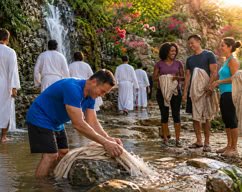
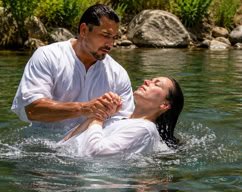
Catholics see things differently. We believe that the sacraments don’t merely symbolize what God does spiritually. They’re visible actions through which God actually accomplishes what they signify. In baptism, for example, the washing with water doesn’t merely represent spiritual cleansing. It’s the means through which God ordinarily brings that cleansing about.
But is there any biblical basis for believing that God works this way?
An Old Testament principle
The Bible is full of examples of God using physical things to accomplish what those objects could never accomplish on their own.
For example, in the Old Testament, a dead man came back to life when his body touched the bones of the prophet Elisha (2 Kings 13:21). And Naaman the Syrian was healed of leprosy when he washed seven times in the Jordan River, as the prophet Elisha had instructed him (2 Kings 5:10–14).
In neither case did the bones or the water possess any miraculous power of their own. God accomplished the miracles, but he chose to accomplish them through physical things.
And these weren’t isolated incidents.
The same principle in the New Testament
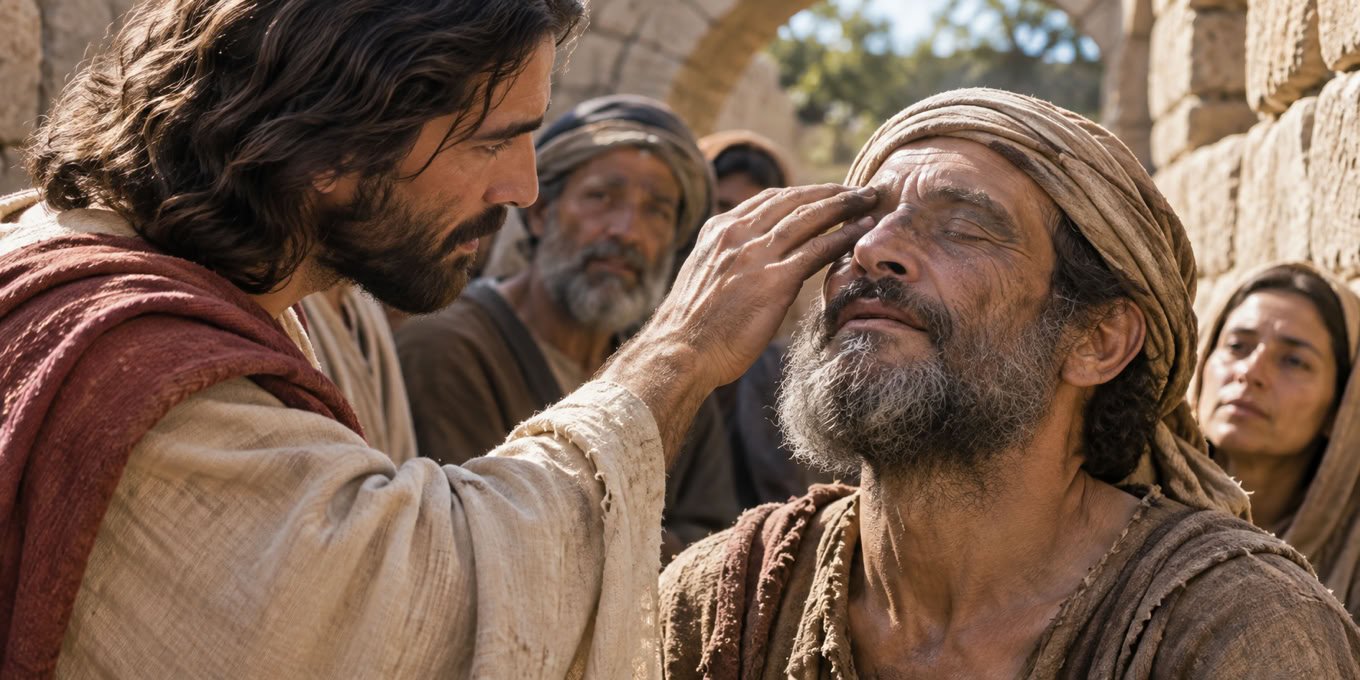
When Jesus encountered a man who had been blind from birth, he spit on the ground, made mud with his saliva, and put it on the man’s eyes. Then he told him to wash in the pool of Siloam (John 9:6–7).
Later, the man explained what happened: “I went and washed, and then I could see” (John 9:11).
Jesus could certainly have healed the man instantly, without mud, water, or a trip to Siloam. But he didn’t. He chose to make the man’s healing dependent upon an outward, physical action. The man wasn’t healed until he washed.
In another incident, a woman who had suffered from bleeding for twelve years was healed when she touched the edge of Jesus’ garment (Luke 8:43–44). At Gennesaret, people brought their sick to Jesus and begged to let them touch the edge of his cloak, “and all who touched it were healed” (Matthew 14:36).
And the same pattern continued after Jesus’ Ascension.
People carried the sick into the streets in the hope that Peter’s shadow might fall on them (Acts 5:15–16). The apostles anointed sick people with oil and healed them (Mark 6:13). And God performed such extraordinary miracles through Paul that even handkerchiefs and aprons that had touched him were taken to the sick, who were healed and delivered from evil spirits (Acts 19:11–12).
Think about that. God used pieces of cloth that had touched an apostle to heal the sick and drive out demons.
Of course, these miracles weren’t sacraments. But they demonstrate the same underlying principle: God can use ordinary physical things as instruments of his extraordinary power. If he can do that, why should we object in principle to his using water to convey spiritual regeneration?
Not just extraordinary miracles
There’s an important difference between these extraordinary miracles and the sacraments. The miracles were exceptional events, while the sacraments are established practices of the Church.
But Scripture gives us examples of those, too.
James tells Christians:
Is anyone among you sick? Let them call the elders of the church to pray over them and anoint them with oil in the name of the Lord. And the prayer offered in faith will make the sick person well; the Lord will raise them up. If they have sinned, they will be forgiven (James 5:14–15).
Notice that James doesn’t describe the anointing as merely a symbolic gesture commemorating something God has already done. He instructs Christians to call the elders, who are to pray and anoint the sick person with oil, and he associates that action and prayer with healing and the forgiveness of sins.
This is the biblical foundation of the Catholic sacrament of Anointing of the Sick.1
We find another example in Samaria, where people believed Philip’s preaching and were baptized. But the Holy Spirit had not yet fallen upon them. When Peter and John arrived from Jerusalem, they prayed for the new believers and laid their hands on them, and the believers received the Holy Spirit (Acts 8:14–17).
Why the laying-on of hands? Couldn’t God have given them the Holy Spirit without it? Of course he could have. In fact, he did exactly that when the Holy Spirit descended upon Cornelius and his household (Acts 10:44–48).
But in Samaria, God chose to communicate the gift of the Holy Spirit through a visible, physical action.
We see something similar when Paul reminds Timothy of the gift of God he received through the laying-on of Paul’s hands (2 Timothy 1:6).
Once again, the physical action wasn’t merely a reminder of something God had already accomplished. It was associated with the actual conferral of a spiritual gift.
God isn’t limited to physical means
None of this means that God can communicate grace only through physical things. He certainly isn’t limited by his creation, and Catholics don’t believe that he is. God can act directly whenever he chooses.
But given all these examples, there’s certainly nothing unbiblical about the idea that God can use physical things to accomplish spiritual purposes.
And that’s the point.
None of these examples, by itself, proves that baptism regenerates or that the other Catholic sacraments convey grace. Those questions must be settled by examining what Scripture teaches about the individual sacraments.
But they do establish something important: There’s nothing inherently unbiblical about God using physical things to accomplish spiritual purposes. He does it throughout Scripture.
The greatest example of all
If you think about it, the sacramental principle is demonstrated most spectacularly in the Incarnation and Atonement.
God didn’t save us through some purely spiritual transaction disconnected from the material world. The Word became flesh, and our redemption was accomplished through the actual suffering and death of Jesus Christ.
Protestants put a lot of faith in the “power of the blood,” and rightly so. But this was not some “spiritual” blood. It was real blood, red, and dripping. And “without the shedding of blood there is no forgiveness” (Hebrews 9:22).
Christ’s sacrifice is, of course, something far greater than any sacrament. It’s the source of the grace the sacraments communicate.2 But it also demonstrates something fundamental about the way God has chosen to save us: He doesn’t disdain the physical world. He uses it.
If God chose to accomplish our redemption through the physical body and blood of Jesus Christ, why should we find it objectionable that he might use ordinary water to communicate the grace of that redemption to us?
Of course, this doesn’t prove that baptism regenerates or that the other Catholic sacraments convey grace. Those questions require their own examination.
But it does establish something important. The Catholic understanding of the sacraments isn’t based on some strange, unbiblical notion that physical things can convey spiritual grace. It’s based on a principle we find throughout Scripture, from Elisha’s bones and the waters of the Jordan to the garments of Jesus and the handkerchiefs of Paul.
God has always been willing to use ordinary physical things to accomplish extraordinary spiritual purposes.
Why should the sacraments be any different?
__________
1 Catechism of the Catholic Church, 1510–1513, explains the biblical foundations of the Anointing of the Sick, including James 5:14–15.
2 Catechism of the Catholic Church, 1115–1116, explains that the sacraments are rooted in the saving work of Christ and that his power acts through them.
Featured Articles
Copyright © 2024–[YEAR] Catholicoutlook.me