Common Objections
Common Objections

Common Objections

Jesus already paid the full penalty for our sins. We don't have to suffer for them ourselves
Christ’s sacrifice on the cross was completely sufficient to save us from our sins. Catholics certainly don’t believe that we must somehow make up for anything lacking in his sacrifice. But does this mean that God never punishes us for sins he has already forgiven? Scripture tells us otherwise.
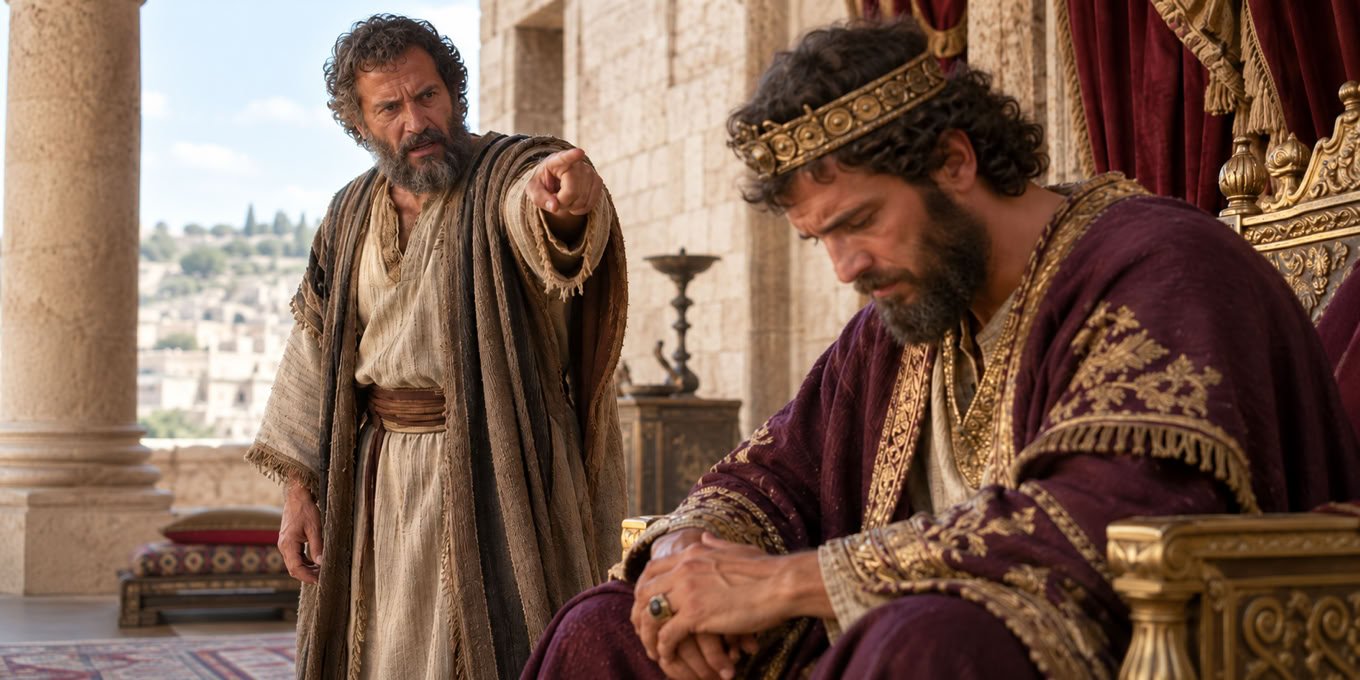
Consider the example of King David. After committing adultery with Bathsheba, David arranged for her husband, Uriah, to be killed in battle to conceal what he had done. The prophet Nathan subsequently confronted David about his sins, and David acknowledged his guilt.
Nathan then told him, “The LORD has taken away your sin. You are not going to die” (2 Samuel 12:13).
David had been forgiven. Yet Nathan immediately announced that David would nevertheless suffer terrible consequences for his sins.
“Now, therefore, the sword will never depart from your house, because you despised me and took the wife of Uriah the Hittite to be your own.” This is what the LORD says: “Out of your own household I am going to bring calamity upon you. Before your very eyes I will take your wives and give them to one who is close to you, and he will lie with your wives in broad daylight. You did it in secret, but I will do this thing in broad daylight before all Israel” (2 Samuel 12:10-12).
These were not merely the natural consequences of David’s actions. They were punishments that God himself declared he would inflict because of David’s sins—even though those sins had already been forgiven.
This pattern remains true in the New Testament also. In 1 Corinthians 11:29-30, Paul tells us that some of them had become weak or sick, and others had even died, because they had failed to discern the body of Christ. Paul drew this lesson from the punishments inflicted on the Corinthian believers: “When we are judged by the Lord, we are being disciplined so that we will not be condemned with the world” (1 Corinthians 11:32). Notice the distinction Paul makes. God’s judgment upon these Christians was not a denial of their salvation, but a means of preserving them from condemnation. Their punishment was corrective rather than condemnatory.
Why would God punish someone he has already forgiven? Hebrews provides the answer. God disciplines his children, not because Christ’s sacrifice was insufficient, but because they still need to be made holy. As the author explains, “God disciplines us for our good, that we may share in his holiness” (Hebrews 12:10).
Divine discipline, then, is not opposed to Christ’s saving work. It is one of the means by which that work bears fruit in our lives.
What do these passages tell us? That forgiveness does not necessarily eliminate all punishment for sin. David was forgiven, yet God still punished him. The Corinthians were subjected to divine judgment, not so that they would be condemned, but so that they would be saved. And Hebrews tells us that God disciplines his children for their good, so that they may share in his holiness.
The Catholic doctrine of purgatory teaches that those who die in God’s friendship, but who still need purification, undergo that final purification before entering heaven, where “nothing impure will ever enter” (Revelation 21:27). This purification does not make up for anything lacking in Christ’s sacrifice. Rather, it is through that sacrifice that we are saved and made holy.
The point, then, is not that these passages prove the existence of purgatory, but that they refute the objection that purgatory would somehow diminish the sufficiency of Christ’s sacrifice. Scripture clearly shows that God may continue to discipline and purify those whose sins he has forgiven. The Catholic doctrine of purgatory is entirely consistent with that biblical principle.
Featured Articles
Copyright © 2024–[YEAR] Catholicoutlook.me