Common Objections
Common Objections

Common Objections

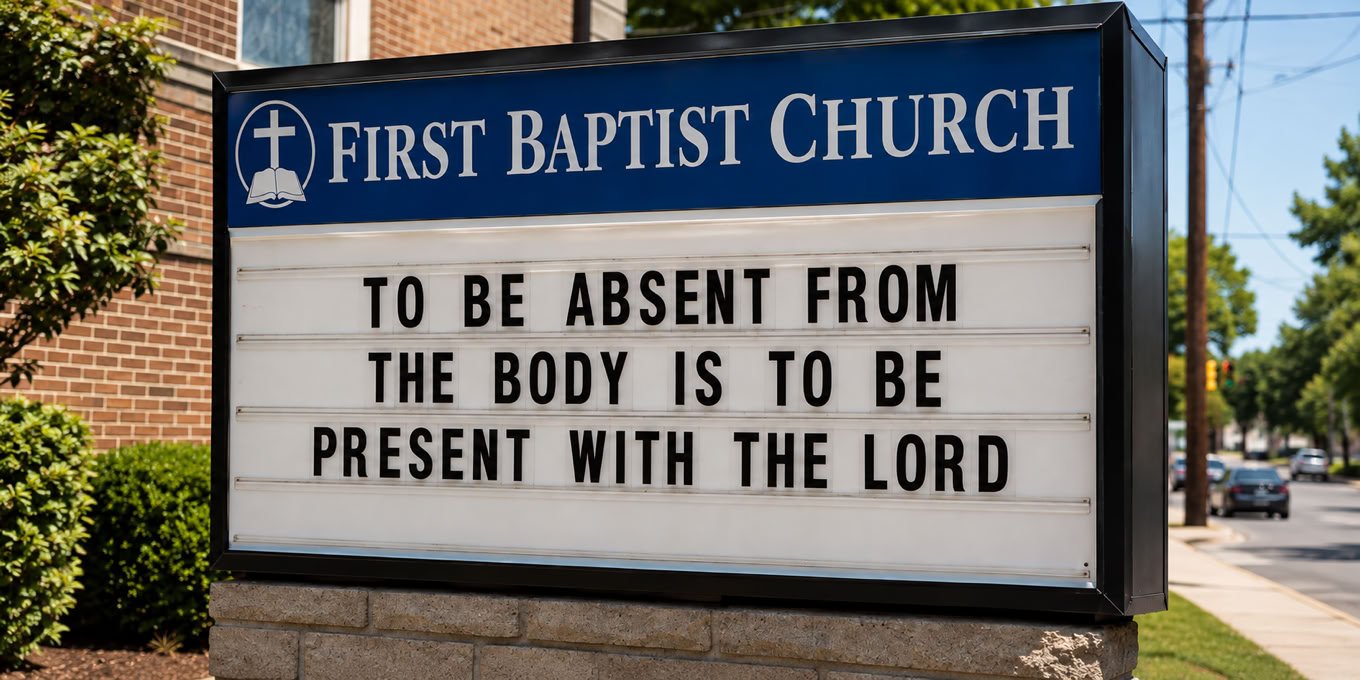
Paul said that to be absent from the body is to be present with the Lord. There's no room for Purgatory
Paul certainly looked forward to being with Christ after death. He wrote, “We are of good courage, I say, and prefer rather to be absent from the body and to be at home with the Lord” (2 Corinthians 5:8). Elsewhere he expressed his desire “to depart and be with Christ” (Philippians 1:23).
But how does that rule out Purgatory?
Notice first that Paul does not actually say, as the verse is sometimes paraphrased, “to be absent from the body is to be present with the Lord.” He says that he would “prefer rather to be absent from the body and to be at home with the Lord.” The popular paraphrase turns two things Paul desires into an explicit statement of equivalence that Paul himself does not make.
More importantly, even if Paul means that Christians who die go immediately to be with Christ, that still does not rule out Purgatory. The Catholic doctrine of Purgatory does not teach that those undergoing purification are separated from Christ or uncertain of their final destiny. They have died in God’s grace and are destined for heaven; Purgatory is simply their final purification before entering the fullness of heavenly glory.
So the real question is not whether the Christian who dies goes to Christ. Catholics agree that he does. The question is whether everyone who dies in Christ is already perfectly purified at the moment of death. Nothing in 2 Corinthians 5:8 answers that question.
In fact, elsewhere Paul speaks of a person whose deficient work is exposed by fire: “he himself will be saved, but only as through fire” (1 Corinthians 3:15). Christians disagree about precisely what that passage describes, but at the very least it shows why the question of purification cannot be settled merely by quoting 2 Corinthians 5:8.
Paul longed to leave this earthly life and be with Christ. Catholics do too. But saying that the faithful departed are with Christ does not tell us that no purification can occur after death.
Featured Articles
Copyright © 2024–[YEAR] Catholicoutlook.me