Common Objections
Common Objections

Common Objections

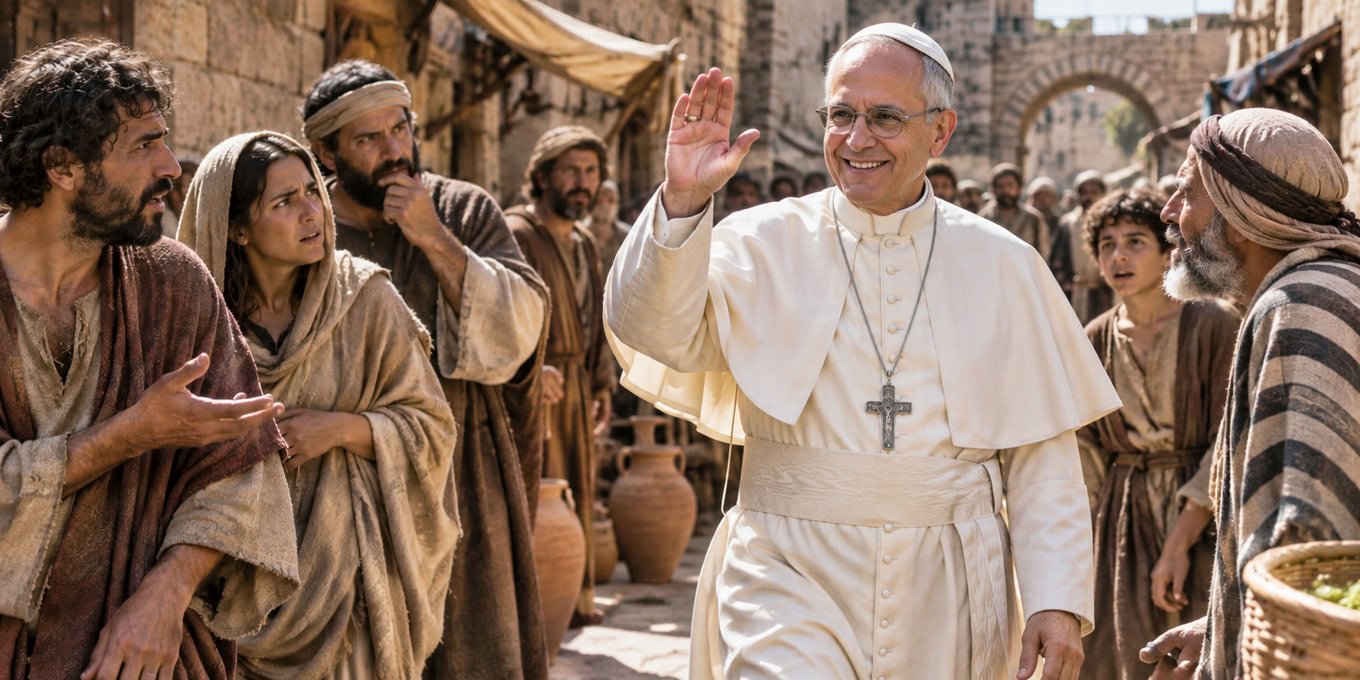
The early Church didn't have a pope
If you could travel back to the first century, you wouldn’t find a pope living in the Vatican, wearing elaborate vestments, or presiding over the Church with all the administrative machinery we associate with the modern papacy.
But does that mean the early Church had no papacy?
Not at all. We need to distinguish between the office itself and the way that office developed over time.
Catholics believe Jesus established Peter as the visible head of his Church. He gave Peter the keys to the kingdom of heaven (Matthew 16:18–19), instructed him to strengthen his brethren (Luke 22:31–32), and entrusted him with the care of his sheep (John 21:15–17).
But what happened after Peter died? Did his authority die with him?
Jesus didn’t give Peter responsibility for a Church that would disappear when Peter died. He promised to build a Church that would endure (Matthew 16:18). If Peter’s leadership was necessary for the Church during his lifetime, why would that need suddenly disappear when he died?
The historical evidence suggests that it didn’t.
Around AD 96, Clement, the bishop of Rome, intervened in a dispute in the Church at Corinth. He wrote a lengthy letter urging the Corinthians to restore their unjustly deposed presbyters. Remarkably, Corinth wasn’t even part of the Church of Rome. Yet the letter warned of the serious consequences of disobeying its instructions and called upon the Corinthians to comply.1
Around AD 180, Irenaeus of Lyons appealed to the Church of Rome as a particularly important witness to apostolic teaching. He traced its succession of bishops back to Peter and Paul and declared that other churches must agree with it because of its preeminent authority.2
And in the third century, Cyprian of Carthage referred to Rome as the “chair of Peter” and the “principal church, from which sacerdotal unity has arisen”3 Cyprian sometimes disagreed sharply with the bishop of Rome, but he nevertheless recognized Rome’s special place in the Church.
None of this means that the papacy operated in the second or third century exactly as it does today. It didn’t. The scope and exercise of papal authority became more clearly defined over time, sometimes amid considerable controversy.
But that’s not the same as saying the papacy was invented later.
The early Christians didn’t have Vatican City, papal elections conducted by a College of Cardinals, or a fully developed system of canon law. What they did have was a Church in which Rome already occupied a special position, associated with Peter and the succession of its bishops.
The question isn’t whether the early papacy looked exactly like the modern papacy. It didn’t. The question is whether the modern papacy developed from an authority already present in the early Church.
And the historical evidence gives us good reason to believe that it did.
__________
1 Clement of Rome, First Epistle to the Corinthians, chapters 44, 57, 59, and 63, traditionally dated to approximately AD 96. Chapter 44 condemns the unjust removal of presbyters, chapter 57 urges those responsible for the dispute to submit to their presbyters, and chapters 59 and 63 warn against disobedience and call for compliance with the letter. The letter is written in the name of the Church of Rome rather than explicitly in Clement’s own name. https://www.newadvent.org/fathers/1010.htm
2 Irenaeus of Lyons, Against Heresies, Book III, chapters 3.2–3, approximately AD 180. Irenaeus identifies Rome as the Church founded by Peter and Paul, provides a succession of its bishops, and appeals to its special standing as a witness to apostolic tradition. The familiar translation “preeminent authority” reflects one interpretation of a Latin expression whose precise meaning has been debated. https://www.newadvent.org/fathers/0103303.htm
3 Cyprian of Carthage, Epistle 59.14 (numbered 54.14 in the New Advent edition), written to Pope Cornelius in approximately AD 252. Cyprian describes Rome as the chair of Peter and the principal church from which priestly unity originates. His later disagreements with Pope Stephen over baptism demonstrate that recognition of Rome’s special position did not eliminate disputes over the extent of Roman authority. https://www.newadvent.org/fathers/050654.htm
Featured Articles
Copyright © 2024–[YEAR] Catholicoutlook.me