Common Objections
Common Objections
Common Objections
Common Objections
Common Objections
Common Objections
Common Objections

Catholic Outlook

Catholic Outlook
Catholic Outlook
Recent Additions
Common Objections: The Bible
_____
“Jesus condemned tradition (Mark 7:5-13), but Catholics elevate their man-made traditions to the level of equality with Scripture!”
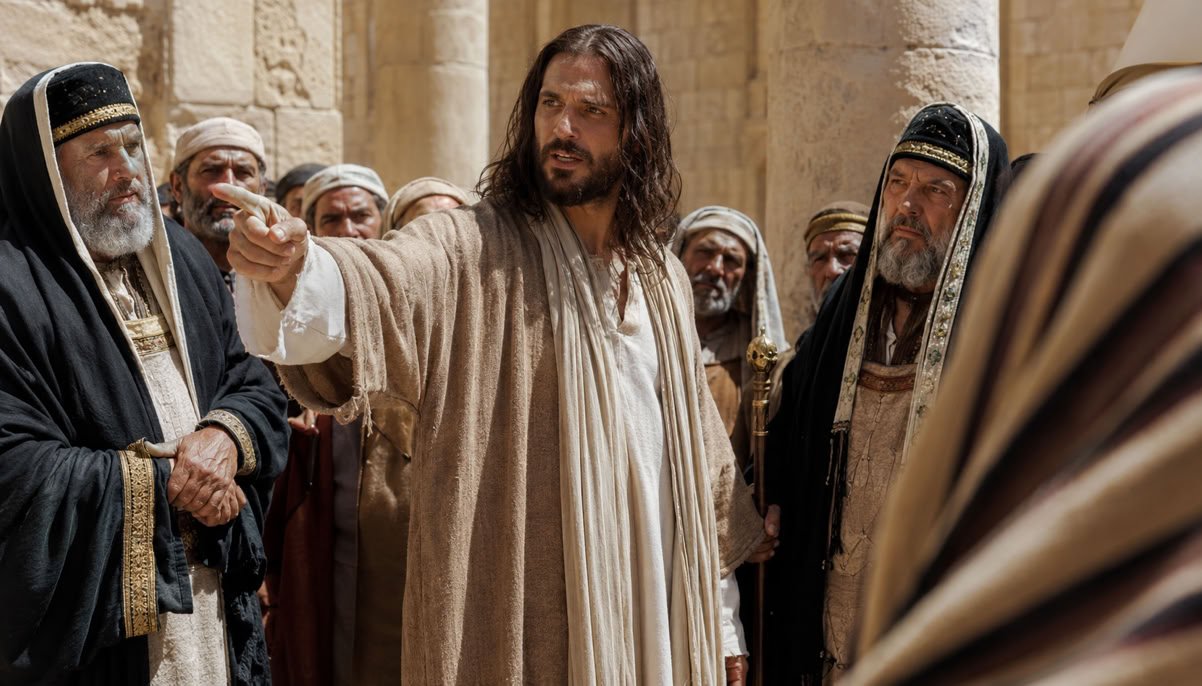
Some Christians say that Scripture must be our only source of truth because Jesus condemned tradition. For example, Norman Geisler and Ralph MacKenzie wrote,
Jesus made it clear that the Bible was in a class of its own, exalted above all tradition. He rebuked the Pharisees for not accepting sola Scriptura and negating the final authority of the Word of God by their religious traditions, saying “And why do you break the commandment of God for the sake of your tradition? . . . You have nullified the word of God for the sake of your tradition” (Matt. 15:3, 6).1
But Jesus did not condemn all traditions indiscriminately, just those “traditions of men” that nullified God’s word. For example, the Pharisees had the “corban” tradition by which they would declare their money or property “corban,” meaning set aside for God. In practice, they kept control of the money or property and enjoyed its benefits while they were alive, and it would pass to the temple when they died. By doing this they kept their assets for themselves and avoided having to support their elderly parents.2 Thus, by their tradition they nullified the Word of God, which said, “Honor your father and mother.”
However, there were other rabbinic traditions that Jesus upheld. For example, in Matthew 23:2-3, we read, “The teachers of the law and the Pharisees sit in Moses’ seat. So you must obey them and do everything they tell you. But do not do what they do, for they do not practice what they preach.”
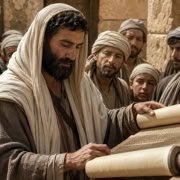
The Old Testament never mentions Moses’ seat, but it was understood that the authoritative teaching office of Moses was passed on to his successors. Thus, the Pharisees held a legitimate teaching office, and they must be obeyed, but not imitated. Leopold Sabourin wrote,
As the first verse of the Mishna tractate Abote indicates, the Jews understood that God’s revelation, received by Moses, had been handed down from him in uninterrupted succession, through Joshua, the elders, the prophets and those of the great Sanhedrin (cf. Acts 15:21). The Scribes and Pharisees participated in this authoritative tradition and as such their teaching deserved to be respected.3
Jesus upheld the legitimacy of the Pharisees’ teaching office based on Tradition, not Scripture. And later the deposit of faith he entrusted to the apostles was entirely Tradition for years before the first word of it was written down. Even then, writing under the inspiration of the Holy Spirit, the apostle Paul upheld the validity of that Tradition, whether it was written down or not:
Now I praise you because you remember me in everything, and hold firmly to the traditions, just as I delivered them to you (1 Corinthians 11:2).
So then, brethren, stand firm and hold to the traditions which you were taught, whether by word of mouth or by letter from us (2 Thessalonians 2:15).
And we also thank God continually because, when you received the word of God, which you heard from us, you accepted it not as the word of men, but as it actually is, the word of God, which is at work in you who believe (1 Thessalonians 2:13).
And the things you have heard me say in the presence of many witnesses entrust to reliable men who will also be qualified to teach others (2 Timothy 2:2).
The apostolic Tradition to which Paul refers comes from God and is to be accepted as such. But there’s nothing intrinsically wrong with man-made traditions, provided they don’t contradict the word of God. For example, the “sinner’s prayer,” the altar call, Sunday worship, tithing money, confessing our sins directly to Jesus, weddings performed by clergy, pews, pulpits, praying with hands folded, Wednesday night Bible study, “praise and worship music” in church, sermons, the doxology at the end of the Lord’s Prayer, infant dedications, daily devotions, and the celebration of Christmas and Easter are all “traditions of men,” but there’s nothing wrong with any of them, and many Christians practice one or more of them.
So, it’s true that Jesus rejected some of the Pharisees’ traditions, but others he upheld. And the ones he rejected he rejected because they contradicted the word of God, not because they were man-made. Most importantly, the Tradition he entrusted to the apostles, that was spread by them to the communities they established, was to be accepted “not as the word of men, but as it actually is, the word of God” (2 Thessalonians 2:13).
__________
1Norman Geisler and Ralph E. MacKenzie, “What Think Ye of Rome,” Christian Research Journal, Spring/Summer 1994, 35.
2“Making Void the Word of God,” Ligonier Ministries, https://learn.ligonier.org/devotionals/making-void-word-god
3Leopold Sabourin, The Gospel According to St. Matthew (Bombay: St. Paul Publications, 1982), vol. 2, 793.
Copyright © 2024-2026 Catholicoutlook.me