Common Objections
Common Objections
Common Objections
Common Objections
Common Objections
Common Objections
Catholic Outlook
Catholic Outlook

Catholic Outlook

Common Objections: The Apocrypha
_____
“These books were never acknowledged as Scripture by the Jewish leaders”
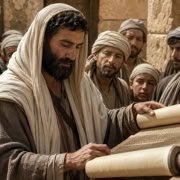
The Jewish leaders didn’t finally nail down their canon of Scripture until about sixty years into the Christian era. According to the Encyclopedia Britannica,
In the last decade of the 1st century, the Synod of Jamnia (Jabneh), in Palestine, fixed the canon of the Bible for Judaism, which, following a long period of flux and fluidity and controversy about certain of its books, Christians came to call the Old Testament. A possible factor in the timing of this Jewish canon was a situation of crisis: the fall of Jerusalem and reaction to the fact that the Septuagint was used by Christians and to their advantage, as in the translation of the Hebrew word ʿalma (“young woman”) in chapter 7, verse 14, of Isaiah—“Behold, a young woman shall conceive and bear a son, and shall call his name Immanuel”—into the Greek term parthenos (“virgin”).1
The “Septuagint” (or “LXX”) was the Greek translation of the Hebrew Scriptures, and according to the Protestant International Bible Commentary, “Recent studies show that for all practical purposes the Bible of the NT writers was the LXX.2 When the New Testament authors quoted from the Old Testament, they quoted from the LXX 75% to 90% of the time.3
That’s important because “the completed LXX not only contained the 39 books of the Hebrew canon; it also contained other books as well, books commonly called apocryphal.”4 So, the Bible used by the New Testament authors included the “Apocrypha” (also called the “deuterocanonical” books).
It seems that the Jews rejected the Greek LXX, and along with it the deuterocanonical books, because of Christian reliance on that translation. But the Jewish leaders that rejected the LXX also rejected Jesus as Messiah, and by the time they rendered an opinion on the canon of Scripture the Christian church had been going strong for decades. The Jewish leaders had no authority to tell “the Church of the living God, the pillar and foundation of the truth” (1 Timothy 3:15) what was and was not Scripture any more than they could tell it who was and was not the Messiah.
Given the universal acceptance of the LXX among the early Christians, it is difficult to imagine that Jesus himself only accepted the smaller canon eventually embraced by the Jews who rejected him. Again, the International Bible Commentary acknowledges this:
Even if one holds that Jesus put His imprimatur upon only the 39 books of the Hebrew OT . . . he must admit that this fact escaped the notice of many of the early followers of Jesus, or that they rejected it, for they accepted as equally authoritative those extra books in the wider canon of the LXX . . . Polycarp, Barnabas, Irenaeus, Clement of Alexandria, Tertullian, Cyprian, Origen – Greek and Latin Fathers alike – quote both classes of books, those of the Hebrew canon and the Apocrypha, without distinction. Augustine (A.D. 354-430) in his City of God (18.42-43) argued for equal and identical divine inspiration for both the Jewish canon and the Christian canon.5
So, in the early centuries of the Christian era there was a “Jewish canon” that excluded the deuterocanonical books, and a “Christian canon” that included them. As the International Bible Commentary says elsewhere, “The apocryphal books were excluded from the Hebrew canon at least from A.D. 90 on, but included in the canon of the Christian church.”6
Whenever the Church, through its councils, produced lists of the scriptural books, the deuterocanonical books were always included among the other biblical books, without distinction. One of the earliest such lists was produced by the Synod of Hippo Regius (A.D. 393). The same list was ratified by the Synods of Carthage (A.D. 397, 419), and the Ecumenical Councils of Florence (1442), Trent (1546), and Vatican I (1869).
Martin Luther and the other Reformers decided to reject the long-standing Christian canon and adopt the Jewish canon instead. According to the International Bible Commentary:
Protestant leaders ignored traditional acceptance of all the books of the LXX and refused the status of inspiration to those books of the Vulgate not found in the Hebrew canon. Luther denied canonical status to the Apocrypha although he included them all (except 1-2 Esdras) as an appendix to his translation (1534). He called them “useful and good to be read.” Calvin and his followers completely gave up the idea of canonicity for the Apocrypha and excluded them from the Bible because the Jews who had been entrusted with the oracles of God (Rom. 3:2) had earlier rejected them from their canon.7
There were several theological reasons the Reformers rejected the deuterocanonical books and adopted the Jewish canon, but the reason they gave was that the Jews, according to Romans 3:1-2, had been entrusted with the oracles of God, and therefore, they concluded, it fell to them to tell the rest of us what those were:
What advantage, then, is there in being a Jew, or what value is there in circumcision? Much in every way! First of all, they have been entrusted with the very words of God. (Romans 3:1-2)
I’ve always taken that verse to mean that the Jews, alone among all the nations, were given the great privilege of being made God’s chosen people, and being given his revelation, in the form of the Law of Moses and the writings of the prophets.
I don’t think it means that even after the Messiah came, the Jews who rejected him retained the authority, for all time, to tell the rest of us what constitutes Scripture. If any Jews retained that authority it would be the ones who accepted Jesus, and who, along with their Gentile brothers and sisters, formed the Christian church. I believe God guided his Church and not the second-century Jews, so I accept the Christian canon instead of the Jewish/Protestant canon.
__________
1Emelie T. Sander and H. Grady Davis, “New Testament canon, texts, and versions,” Encyclopedia Britannica, https://britannica.com/topic/biblical-literature/New-Testament-canon-texts-and-versions#ref597958
2Gerald F. Hawthorne, “Canon and Apocrypha of the Old Testament,” International Bible Commentary, ed. F.F. Bruce, (Grand Rapids, MI: Zondervan Publishing House, 1986), 34-35.
3Ryan Reeves, “What is the Septuagint?”, http://thegospelcoalition.org, 2018, https://thegospelcoalition.org/article/what-is-the-septuagint/
4Hawthorn, “Canon,” 34-35.
5Ibid, 37, 35.
6Ibid, 34.
7Ibid, 36.
Recent Additions
Copyright © 2024-2026 Catholicoutlook.me
MENU